We would like to use cookies to store information on your computer, to improve our website. One of the cookies we use is essential for parts of the site to operate and has already been set. You may delete and block all cookies from this site, but parts of the site will not work. To find out more about the cookies we use and how to delete them, see our privacy notice.
Be as specific as possible about dates or generations. Try to work out the timeframe based on information you KNOW is correct: ie. I was born in 1955, my dad was born in 1916 so my grandfather's date of birth (and his cousins) must have been somewhere in the 1890's.
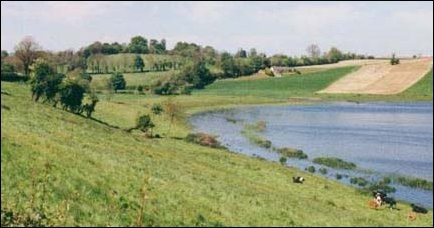
The Hill of CroghanThe Hill of Croghan, viewed from across the Town Lake
Acknowledgment to http://www.iol.ie/~galwill/seancill.htm
The Uí Dhonnchadha (Clan Donohoe) of Breifne were chiefs of the Teallach Dhúnchadha, traditionally a branch of the Uí Bhriúin Bréifne, itself said to be a branch of the royal Uí Bhriúin Aí, rulers of Connacht. The Teallach Dhúnchadha was a tuath (a petty kingdom or lordship) occupying the territory later known as the barony of Tullyhunco, which included the parishes of Killeshandra and Kildallan. The barony contains a hill called Corann Cruachan (Croghan), the site of the inauguration of the O’Rourkes.
The name Killeshandra comes from the Irish 'Cill na Sean Rátha', meaning the 'Church of the Old Fort'. This church was sited on an old semi-circular 'rath' or fort overlooking the lake that is now-a-days known as the Town Lake. Records in the Papal Annates concerning the appointments of clergy to the church date from 1411 and in 1436 were are told that the patron saint of the church was St. Brigid.
During the later middle ages the dominant family or clan in the area was the McKiernan family. The land of Tullyhunco, which was the McKiernan territory, was included in the rectory of the same name and its church was at Killeshandra. The chieftains of the McKiernans had their dwelling place at Croghan and the family had managed to maintain a certain degree of autonomy thanks to their geographical position between the two hostile septs of the O'Reilly and the O'Rourke.